Blog
Buying a Landed House in Singapore: What Buyers Must Check
Fendy Lee
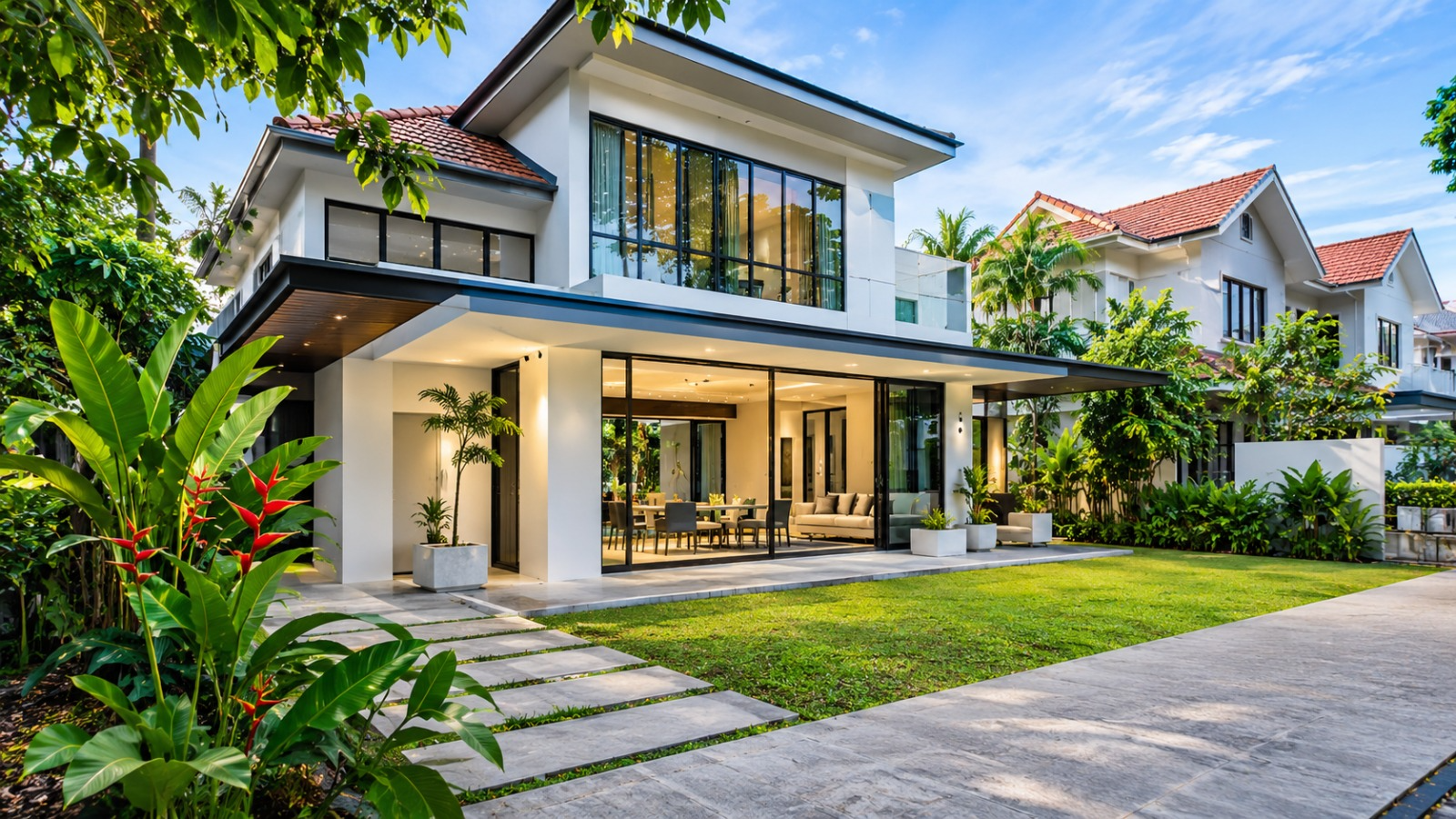
Moving from an HDB flat or condo to a house with your own land is a big step, and the process looks nothing like buying a condo. Buying a landed house in Singapore means checking the title, the building rules on the plot, the condition of an older structure, and your cash position, all before the option period runs out.
Fendy Lee, a senior property advisor at Huttons Asia with close to two decades in the market, helps upgraders work through exactly this. What follows covers the checks in the order you will meet them, from eligibility to collecting the keys, with the numbers you need to plan around.
Why Is Buying a Landed House Different From Buying a Condo?
With a condo, you buy a unit in a building that a management corporation looks after. With a landed home, you own the land and the structure on it, and everything from the roof to the drains is your responsibility.
Three differences catch most upgraders off guard:
- No two houses are alike. Land size, shape, orientation, tenure, and the state of the building all move the price, so you can't compare one house to the next the way you compare condo units on the same floor.
- The plot has rules attached. How high you can build, how close to the boundary you can build, and whether part of the land is earmarked for a future road all affect what you are actually buying.
- Fewer transactions mean fewer reference points. Landed deals are far less frequent than condo resales, so judging a fair price takes more work.
If you are coming from an HDB flat, our HDB-to-condo upgrade agent page covers the step before this one. For landed, the extra homework below is what protects you.
What to Check Before You Pay the Option Fee
Before you commit to buying a landed house in Singapore, run through these six points. Any one of them can change your decision.
- Whether you are legally allowed to buy this type of property
- What the title shows: owner, mortgages, caveats, easements
- What you can build or renovate on the plot, and whether the existing house matches the approved plans
- Whether the tenure is freehold or leasehold, and how many years remain
- The physical condition of the house, ideally inspected during the option period
- Your total cash need, including stamp duties, and whether the bank's valuation supports the price
Who Is Eligible to Buy a Landed House in Singapore?
Singapore citizens
Citizens can buy landed property without any special approval. Good Class Bungalows are an extra restriction in the other direction: only citizens can own one.
PRs and foreigners
Landed property is classed as restricted residential property. Permanent residents and foreigners need approval from the Singapore Land Authority before they can buy, and approval is not automatic. Foreigners, in particular, are approved only in limited cases. If this applies to you, sort out the approval route with your lawyer before you are bound by a contract, and make the sale conditional on it.
Strata landed and cluster houses
Cluster houses and strata landed homes sit in a grey area. Whether one counts as restricted landed property depends on how the development is classified, not on how it looks. Ask your lawyer to confirm the status before you pay anything, especially if you are a PR or foreigner.
Terrace, Semi-Detached or Bungalow: Which Fits You?
Your budget and how much land you want will usually narrow this down quickly.
| Type | Typical minimum plot | Shared walls | Suits | Watch out for |
|---|---|---|---|---|
| Terrace | About 150 sqm | One or both sides | Upgraders wanting landed living at the lowest entry price | Narrow plots, limited room to extend |
| Semi-detached | About 200 sqm | One side | Families who want a garden without bungalow pricing | Party wall condition, shared boundary issues |
| Bungalow | About 400 sqm | None | Larger families, buyers wanting space and privacy | Higher price and upkeep |
| Good Class Bungalow | 1,400 sqm | None | Citizens buying in designated GCB areas | Citizens only, very high price, strict rules |
| Cluster house | Shared land | Usually attached | Buyers wanting a landed feel with security and facilities | Maintenance fees, strata rules, eligibility status |
Older estates often have plots smaller than today's minimums, so always check the actual land area on the title rather than assuming it from the house type.
Is the Title Clean? What the Land Records Tell You
Title search and encumbrances
Your lawyer will search the title to confirm who owns the property and what is registered against it. You are looking for mortgages that must be discharged, existing caveats, and any restrictions that come with the land. A mortgage is normal and gets cleared at completion. A surprise is not.
Easements and caveats
An easement gives someone else a right over part of your land. Common ones are drainage lines, utility access, and rights of way for neighbouring plots. They can limit where you build, plant, or fence, so ask exactly what the easement covers and who benefits from it.
A caveat is a notice lodged against the title to protect an interest. If another party has one on the property you want, find out why before you proceed. Once you exercise the option, your lawyer will normally lodge your own caveat so the seller can't deal with the property behind your back.
Road line plan and road reserve
Some plots carry a road line, which marks land that the authorities may take in the future for road widening. That strip is usually unusable for building and can be acquired. Your lawyer's enquiries to the relevant agencies should flag road lines, drainage reserves and similar constraints, but ask the question directly so you see the answer in writing. A plot that looks 250 sqm on paper may effectively be less.
How Much Can You Actually Build on the Plot?
Storey limit and envelope control
Most landed estates cap houses at two storeys with an attic, though a few designated areas allow three. On top of that, URA's envelope control guidelines set how far the building must sit from each boundary, how high it can go, and how large the attic can be. These rules decide how much house you can have on the land, so they matter as much as the land size.
Addition vs. full rebuild
A and A (additions and alterations) work lets you keep the existing structure and change it within the approved envelope. A full rebuild means demolishing and building again under the rules that apply today. The catch is that older houses were sometimes built under looser rules, so the footprint you see may be bigger than what you can legally rebuild. If you are buying a house with plans to knock it down, confirm what the current rules would allow before you price the land.
Approved plans vs unauthorised works
Ask for the approved building plans and compare them with the house as built. Enclosed balconies, extended attics, rear extensions, and roof terraces are the usual suspects. Unauthorised works can lead to rectification orders, and the cost falls on whoever owns the house when the order arrives. Ask the seller for the completion certificate and any approvals for past renovation work.
Freehold or Leasehold: Why Tenure Matters
Freehold and 999-year landed homes have no practical expiry. Leasehold land, typically 99 years, comes with a clock. A shorter remaining lease can limit bank financing, restrict how much CPF you can use, and weigh on resale value as the years run down. For CPF, the remaining lease generally needs to cover you up to age 95.
Leasehold is not automatically a bad choice. It is usually cheaper than freehold in the same area, and that gap can make sense if you plan to live in the house for a defined period. Just know your lease start date, how many years are left, and how that interacts with your loan tenure and your exit plan.
If you're also considering a private condominium, read our guide on Buying a Freehold Condo in Singapore: What Buyers Should Know to understand ownership benefits, costs, and key factors before making a purchase.
What to Look For Inside and Outside the House
Landed homes age differently from condos, and the repair bill lands on you. These are the problems that cost real money:
| Area | What to look for | Why it matters |
|---|---|---|
| Foundation and walls | Diagonal or stair-step cracks, doors and windows that jam, sloping floors | Can point to settlement, which is expensive to fix |
| Moisture | Damp patches, peeling paint, mould, musty smell on ground-floor walls and under bathrooms | Leaks, rising damp, or failed waterproofing |
| Soil and drainage | Ground sloping towards the house, pooling water, sinking driveway | Flooding risk and ground movement |
| Roof | Cracked or slipped tiles, rusted flashing, water stains on top-floor ceilings | Leaks and a roof replacement are a big job |
| Termites | Mud tubes, hollow-sounding timber, wood dust near skirting, discarded wings near windows | Hidden damage to timber structures |
When to call an inspector
Bring one in during the option period, before you exercise. A building inspector, or a structural engineer if you plan major A and A work, can spot what a viewing won't. Cost depends on the size of the property, but it is small next to the repairs it can uncover. If the report shows serious problems, you can negotiate on price, ask the seller to fix them, or walk away before you lose your deposit.
Is the Price Fair? Valuation and Market Trends
Landed prices have been climbing. The official early estimate for the third quarter of 2026 showed landed prices rising 2.8%, after a 2.5% increase in the second quarter, even as overall private home sales volume dropped. Early estimates can be revised, and landed indices swing because the number of deals is small, so treat the trend as context rather than a reason to rush.
Recent transactions
Look at comparable sales on the same street or in the same estate, not just the same postcode district. Compare land size, tenure, house type, condition, and whether the house has been rebuilt. An older house on a good plot is often priced mostly for the land, while a freshly rebuilt house carries the construction on top. Without that breakdown, a price per square foot tells you very little.
If the bank valuation comes in low
Your loan and the CPF you can use are based on the lower of the purchase price and the bank's valuation. If the valuation falls short of the price, you cover the gap in cash. Ask your agent for recent comparable deals, so you know before you exercise the option whether a gap is likely, and talk to the seller about adjusting the price if the valuation disappoints.
Option period and your lawyer
When you pay the option fee, you get a fixed window, commonly around two weeks, to decide whether to proceed. The fee is often about 1% of the price, with a further payment on exercise bringing the deposit to roughly 5%, though terms are negotiable. Use that window for the title search, the building inspection, the bank valuation, and the legal enquiries. Get your lawyer involved before you sign the option, not after, so they can check its terms and advise on any approvals or conditions you should add.
How Much Cash Do You Really Need?
The real cost of buying a landed house in Singapore goes well beyond the price on the option form. Here is how it breaks down.
Down payment, CPF, and loan limits
On a first housing loan, banks lend up to 75% of the price or valuation, whichever is lower. That leaves a 25% down payment, of which at least 5% must be cash, and the rest can come from CPF or more cash. If you already have a housing loan, the limit drops to 45%, which means a 55% down payment with at least 25% in cash. A loan tenure beyond 30 years, or one that runs past age 65, brings the limit down further.
Your monthly debt commitments are also capped by the total debt servicing ratio at 55% of gross monthly income, tested at a higher stress-test interest rate than the one you will actually pay. For a landed home priced in the millions, this ratio often becomes the real limit, not the LTV.
CPF can go towards the down payment and instalments, but remember that the amount you use, plus accrued interest, goes back to your CPF account when you sell.
Stamp duty and ABSD
Stamp duties cannot be paid with CPF, so budget cash for them. Buyer's Stamp Duty is tiered, and on a S$4 million purchase it comes to S$179,600. Additional Buyer's Stamp Duty depends on who you are and what you already own. On the same S$4 million:
| Buyer profile | ABSD rate | ABSD on S$4M |
|---|---|---|
| Singapore citizen, first property | 0% | S$0 |
| Singapore citizen, second property | 20% | S$800,000 |
| Permanent resident, first property | 5% | S$200,000 |
| Foreigner (where approved) | 60% | S$2,400,000 |
If you own an HDB flat or condo and are buying a landed property to replace it, you may be able to claim the ABSD back by selling your existing home within the prescribed period, generally six months from acquiring the new one. That means the tax is payable upfront and refunded later, so make sure your cash flow can handle the wait. Your lawyer can confirm the exact start date and conditions.
Other costs to plan for
Legal fees, bank valuation and insurance, an inspection, and renovation or A and A work all add up. Older landed homes often need repairs the seller won't have mentioned, so keep a buffer beyond the purchase.
How a Landed Property Agent Can Help You
Buying a landed house in Singapore involves enough moving parts that having someone who has done it many times is useful. A good landed property agent helps you shortlist plots that suit your budget, pull comparable transactions, read the technical details with you, and keep the timeline on track between option, exercise, and completion.
For many buyers, the harder part is the timing around the sale of their current home. If you are moving from a condo to landed, or planning to downsize later, a rightsizing property agent in Singapore can plan the sale and the purchase together so you are not carrying two properties longer than necessary, and not paying ABSD you could have avoided. Fendy Lee built the Sell 1 Buy 2 Planner for exactly this kind of planning, so you can see the figures before you commit.
Whoever you choose, a top-rated real estate agent in Singapore should be able to show you real transaction data, explain the risks of a particular house in plain terms, and tell you when not to buy.
Conclusion
Landed homes reward careful buyers. Check that you are eligible, read the title, understand what the plot allows, inspect the house, and test the price against the bank's valuation before the option period ends. Work out your cash needs with stamp duties included, not just the down payment, and line up the sale of your current home early.
If you're planning the move, talk it through with Fendy Lee before you sign anything. Selling a condo or HDB flat first? Speak to our HDB-to-condo upgrade agent team, or chat with Fendy Lee on WhatsApp to discuss your property plans. You can also call 9388 5825 for personalised guidance.
FAQs
1. How long does buying a landed house in Singapore take?
Buying a landed house usually takes around three to four months from agreeing on the price to receiving the keys. The timeline may increase if additional approvals or property sales are required.
2. Can I use CPF to buy a landed house?
Yes, Singapore citizens and PRs can use CPF for the down payment and monthly mortgage instalments, subject to eligibility limits. However, stamp duties must be paid in cash.
3. Can I buy landed property if I still own an HDB flat or condo?
Yes, but you must meet the applicable eligibility requirements and pay ABSD on the additional property. HDB owners must also complete their minimum occupation period before purchasing private property.
4. Do landed homes cost more to run than condos?
Generally, yes. Owners are responsible for maintenance costs such as roof repairs, plumbing, pest control, gardening, and property insurance.
5. Should my lawyer lodge a caveat on a landed property?
Yes, lodging a caveat protects your interest in the property after exercising the Option to Purchase. It helps prevent the seller from selling the property or registering new interests before completion.
6. What should I do if the title shows an easement?
Ask your lawyer to explain what the easement covers and how it affects your property rights. If it restricts renovations or usable land, consider negotiating the price or reconsidering the purchase.
7. What's the difference between a rebuilt house and an A&A house?
A rebuilt house has been demolished and reconstructed, usually under current building regulations. An A&A house retains its original structure with approved additions and alterations.
8. Can I rent out a landed house I bought?
Yes, private landed properties can generally be rented out for a minimum period of three months. Rental income is taxable, and you should check any applicable loan or ABSD conditions.
9. Do I need a home inspector for a landed house?
Yes, a professional inspection can identify hidden problems such as leaks, termite damage, and structural cracks. Arrange it during the option period before exercising the purchase option.
10. What documents should I ask the seller for?
Request approved building plans, the completion certificate, renovation approvals, and the latest property tax notice. Also ask for pest treatment records, warranties, and tenancy agreements, if applicable.