Blog
Commercial vs Residential Property in Singapore: Which Is Better?
Fendy Lee
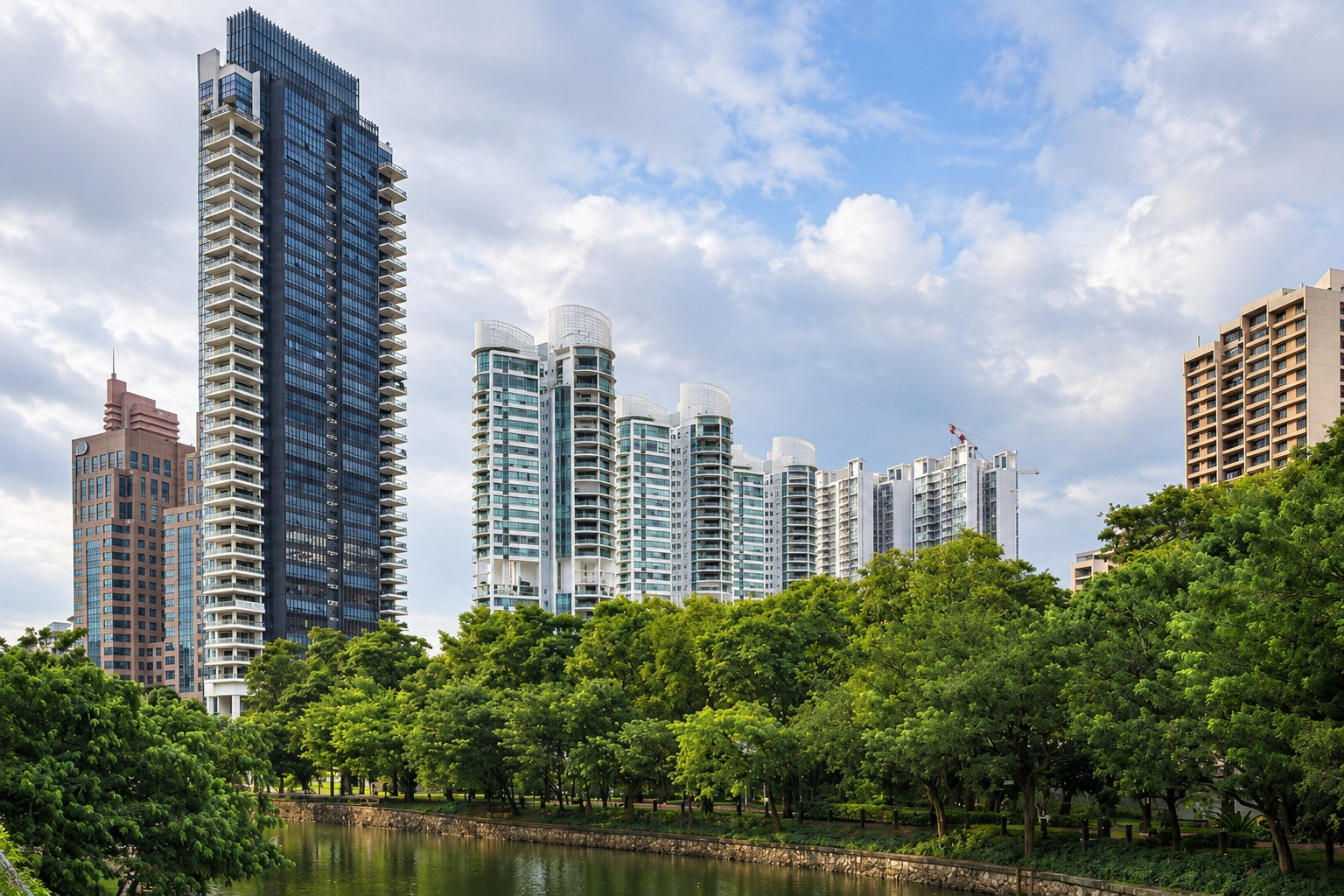
Neither is better for everyone. Commercial vs. residential property in Singapore comes down to three things: how much cash you have, how much risk you can carry, and how soon you may need to sell. Shops and offices can pay more rent and skip ABSD. Residential property is easier to sell and can use CPF. Fendy Lee helps Singaporeans buy, sell and invest in property, and this guide puts both options side by side so you can compare the real costs before you commit.
Commercial vs Residential Property in Singapore at a Glance
Commercial property usually costs less in stamp duty and may pay more rent. It's also harder to finance with CPF and harder to sell. Residential property is the reverse.
| Factor | Commercial property | Residential property |
|---|---|---|
| ABSD | Generally none | Yes, on a second home (20% for a citizen) |
| CPF | Can't be used | Can be used, within limits |
| Loan | Set by the bank, case by case | Capped by MAS rules |
| GST on purchase | May apply | Not charged |
| Rental yield | Often higher, with more risk | Often lower, steadier |
| Tenants | Businesses, longer leases | Families and individuals |
| Selling | Smaller buyer pool | Larger buyer pool |
| Seller's Stamp Duty | Generally, none for shops and offices | Yes, if sold within the holding period |
| Foreign buyers | Generally open | Limited |
Rules change, so check IRAS, MAS, and CPF Board before you buy.
What Counts as Commercial Property in Singapore?
Commercial property is property used for business, such as shops, offices, and industrial units. Its approved use, set by URA, decides how it's taxed and financed.
Shophouses
A shophouse is a narrow, older building, often with a shop below and rooms above. Many sit in conservation areas. Some are approved for business use only. Others are approved for both business and residential use. That second type can be treated in part as residential for stamp duty purposes so that ABSD may apply to that portion. Check the approved use before you make an offer.
Strata offices and retail units
A strata office or retail unit is a unit within a larger building, such as a mall or office tower. Prices start lower than a shophouse. You also share common areas and fees with other owners. Rent depends heavily on foot traffic and the building's tenants.
Industrial property
Industrial units include factories and warehouses. Many sit on JTC land with their own lease rules and stamp duty rules. Treat industrial as a separate type, not as a cheaper shop.
Before you make an offer, a professional real estate agent in Singapore can check the three things buyers often miss: the property's approved use, the remaining lease, and the tenant already in place.
Stamp Duty and Upfront Costs
Commercial property generally has no ABSD, and that's its biggest cost edge over a second home. Stamp duty is the biggest gap between commercial and residential property in Singapore. Both types pay Buyer's Stamp Duty, but ABSD on commercial property generally doesn't apply, because ABSD targets residential purchases. For a second home, a citizen pays 20%, a PR pays 30%, and a foreigner pays 60%. Buyer's Stamp Duty differs too. Non-residential rates top out at 3%, while residential rates reach 6%.
Say you buy at S$2,000,000. As a second home, a citizen pays S$400,000 in ABSD on top of Buyer's Stamp Duty. A shop or office at the same price has no ABSD, so that S$400,000 stays with you. This holds only if the property is fully non-residential. For how ABSD timing and remission work when you still own a home, read our guide on How a Landed Property Agent Helps You Avoid Upgrading Traps.
GST and other costs
GST on commercial property may apply if the seller is GST-registered. The rate is 9%. Banks often won't lend against it, so you may pay it in cash. Residential resale homes don't carry GST. Add legal fees, valuation fees, and agent fees to your budget for either type.
Loans, CPF, and Cash Needed
You can't use CPF to buy commercial property, so your down payment and loan instalments come from cash.
A commercial property loan works differently from a home loan. Banks look at the property, the tenant, and your income, and each bank sets its own limits. Some lend a bigger share of the price than they would for a second home. Others lend less. Get a written assessment before you offer, not after.
CPF for commercial property is the sticking point. CPF Ordinary Account savings can go toward a home, but not a shop or an office. Every dollar of the down payment and every monthly instalment comes from your bank account. For a residential second property, MAS limits how much you can borrow, and CPF can cover part of the payments.
Plan for empty months too. A shop with no tenant still has a loan to pay and no CPF to cover it. Before you decide, work out the cash you'd have left after selling your current home. The free Sell 1 Buy 2 Planner shows that number.
Rental Yield and Returns
Commercial property often pays a higher gross yield, but the gap can shrink once you count empty months and costs.
Rental yield is where commercial vs residential property in Singapore gets compared the most, and misread the most. Market guides often quote about 2% to 3% for homes and 4.5% to 5.5% for commercial. Treat those as rough ranges. Real yield depends on the unit, the location, and the lease.
Here's a made-up example with the same S$2,000,000 budget. A condo rents for S$5,000 a month, or S$60,000 a year. That's a 3.0% gross yield. A shop rents for S$100,000 a year, a 5.0% gross yield.
Now add empty months. If the condo sits empty for one month, rent falls to S$55,000, or 2.75%. If the shop sits empty for four months, rent falls to about S$66,700, or 3.3%. One long gap can erase most of the advantage. These figures are for illustration only.
Commercial property rental yield also depends on the tenant and the lease. Commercial leases are often longer than home leases, and the tenants are businesses. That can mean a steadier income. But when a tenant leaves, finding a new one can take longer. Subtract property tax, upkeep, and agent fees before you call any number a net yield.
Liquidity and Exit: How Fast Can You Sell?
Residential property is usually quicker to sell because both owner-occupiers and investors buy it. Commercial buyers are mostly investors and businesses, so the pool is smaller. A strata shop or a large shophouse can take months to sell, especially when it's empty or the lease is short. Remaining lease matters more here than many first-time buyers expect.
Seller's Stamp Duty is another difference. Residential property carries it if you sell within a set holding period. Shops and offices generally don't, though industrial property has its own rules. Check IRAS before you plan an early sale.
Taxes and Ongoing Costs
Both types pay property tax and tax on rental income. Commercial property adds possible GST to rent.
Property tax
Property tax is based on a property's annual value. For a home you rent out, rates are progressive, from 12% to 36% of annual value. Non-residential property is taxed at a flat 10%. Check IRAS for current rates.
Tax on rental income
Rent counts as taxable income for both types. You can usually deduct costs such as loan interest, property tax, and repairs. Keep your records and declare the rent each year.
GST on rent
Residential rent is exempt from GST. If your taxable commercial income passes S$1 million a year, you must register for GST and charge it to tenants. Most individual owners won't reach that, but check before you buy several units.
Can Foreigners Buy Commercial Property in Singapore?
Yes, foreigners can generally buy commercial property in Singapore, with fewer limits than on homes.
Foreigners pay 60% ABSD on residential property and can't buy HDB flats. Landed homes need approval from the Singapore Land Authority. Shops and offices don't carry ABSD, and landed-home approval doesn't apply. Two cases need care. Industrial property on JTC land can come with lease conditions, and a shophouse approved for residential use can be treated differently. Check the approved use and the rules for each property first.
Commercial vs. Residential Property in Singapore: Which Is Better for You?
Residential suits most homeowners. Commercial suits owners with spare cash, a higher risk limit, and the time to handle empty months.
Here are three common situations.
- You want a better home to live in. Residential is the clear fit. If you're thinking of selling and moving up, ask about your cash, your loan limit, and your move-out timing before you view any home.
- You have spare cash and want more rent. Commercial may suit you if you can cover the loan with no CPF and can handle a few months with no tenant.
- You may need to sell soon or want to keep options open. Residential is easier to exit. If your real goal is a smaller or simpler home, our rightsizing guide compares your choices.
In commercial vs. residential property in Singapore, the better choice is the one that still works when the property sits empty for several months. If you're weighing a second home against a shop or office, our property investment guide covers the costs of the residential route. A commercial property investment agent in Singapore can then check the lease, the tenant, and the approved use with you.
For more guidance on upgrading from an HDB flat to a condo, including what to check before you sell, see Best Property Upgrading Consultant in Singapore.
Conclusion and Next Step
Commercial vs. residential property in Singapore comes down to cash, risk, and timing. Commercial skips ABSD and can pay more rent, but you pay in cash and may wait longer to sell. Residential homes cost more in stamp duty on a second home, but they're easier to finance and easier to sell. Run the numbers for both, including empty months, before you choose. A trusted property agent in Singapore will do that with you before showing a single unit.
Want to talk through your own numbers? Chat on WhatsApp or call 9388 5825. No pressure, no obligation.
FAQs
1. Do I pay ABSD when buying commercial property in Singapore?
Generally, no, because ABSD applies to residential property. A shophouse approved for residential use may be treated differently, so check with IRAS.
2. Which gives a higher rental yield, commercial or residential?
Commercial property often does. Empty months and costs can shrink the gap, so compare net yield, not just the headline figure.
3. Can I use CPF to buy commercial property?
No. CPF Ordinary Account savings can't be used, so the down payment and every instalment come from cash.
4. Is commercial property harder to sell than a home?
Usually, yes. Buyers are mostly investors and businesses, so a sale can take longer than a home sale.
5. How do I check a property's approved use and lease before making an offer?
Check the approved use with URA and the title and tenure with an SLA title search. Read the tenancy agreement and have your lawyer confirm everything before you exercise the option.
6. What hidden costs do buyers often overlook?
The common ones are GST on a commercial purchase, empty months with no CPF to cover the loan, service charges, and repair or fit-out costs. Add them to your budget before you compare yields.
7. How do market trends affect the choice between commercial and residential?
In commercial vs. residential property in Singapore, cooling measures such as ABSD push some investors toward commercial, while office, retail, and shophouse rents move on their own cycles. Check URA's latest data for your property type before you decide.