Blog
Can Foreign Investors Buy Commercial Property in Singapore?
Fendy Lee
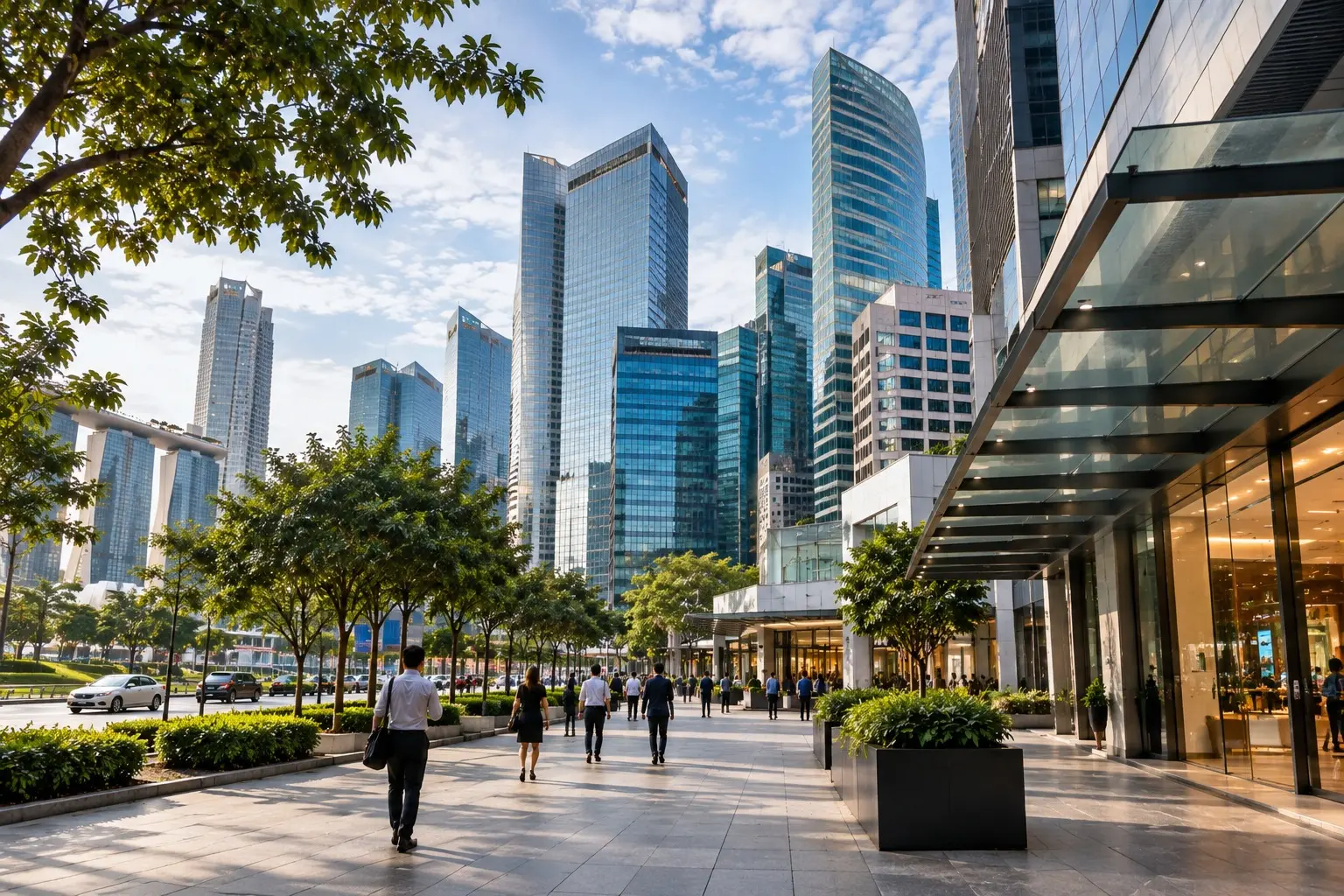
Yes, foreign investors can buy commercial property in Singapore, and they don't pay ABSD on it. Shops, offices, industrial units and fully commercial shophouses are generally open to foreign buyers. The catch is that a mixed-use property may need approval from the Singapore Land Authority (SLA).
That's why many overseas investors look at commercial units. A 60% ABSD makes a Singapore home very costly for a foreigner, while a shop or office doesn't carry that charge. Fendy Lee, a trusted property agent in Singapore, helps buyers read these rules in plain English and see the full costs before they commit.
Who Counts as a Foreign Investor in Singapore?
Under the SLA's rules, a foreign person is anyone who isn't a Singapore citizen, a Singapore company, a Singapore limited liability partnership, or a Singapore society. That means Singapore PRs count as foreign too.
The label matters because the rules are built around it. For foreigners buying commercial property in Singapore, the picture is friendlier than it is for homes. Commercial units are mostly open to everyone. Homes are where PRs and foreigners face different ABSD rates and tighter limits.
So the first question isn't your passport. It's what the property is approved for.
Key Types of Commercial Property in Singapore
Commercial property in Singapore includes retail shops, office spaces, industrial units, hotels, and certain shophouses. Many types are generally available to foreign buyers, but eligibility depends on the property's approved use and classification.
| Property Type | Foreign Ownership | What to Check |
|---|---|---|
| Retail shops | Generally permitted | Approved use, foot traffic, and remaining lease |
| Office units | Generally permitted | Location, maintenance fees, and tenant demand |
| Industrial properties (B1 and B2) | Generally permitted | Permitted activities, remaining lease, and facility requirements |
| Hotels | Generally permitted, subject to applicable rules | Property classification, licensing, and approved use |
| Commercial shophouses | Generally permitted | Approved use of each floor and zoning |
| Mixed-use shophouses | Approval may be required | Residential classification, zoning, and SLA requirements |
What Should Foreign Buyers Know About Shophouses?
Shophouses require particular attention because their approved use can affect foreign ownership eligibility. A shophouse approved exclusively for commercial use is generally treated differently from one that includes residential space. Some properties in areas such as Chinatown and Jalan Besar combine shops on the ground floor with residential units above.
Before purchasing, check the property's approved use and zoning with the relevant Singapore authorities. If the property falls under residential property rules, approval from the Singapore Land Authority (SLA) may be required.
When Do Foreign Investors Need SLA Approval?
Foreign investors need SLA approval only when a property counts as residential under the law. For commercial buyers, that mostly means mixed commercial and residential property.
The rule comes from the Residential Property Act of Singapore (RPA), which protects homes for locals. In July 2023, the Ministry of Law and SLA changed the list of non-residential property. Land zoned "Commercial & Residential" and developments approved for both uses now count as residential. Since 20 July 2023, a foreign buyer needs approval to buy them. Most shophouses with homes above fall into this group.
Here's how it works in practice:
- Usually no approval: a single shop or office unit in a non-landed building (even a mixed-use one), a fully commercial shophouse, an industrial unit, or a hotel.
- Approval needed: a whole mixed-use development where homes make up at least 60% of the floor area, and sites or shophouses zoned Commercial & Residential.
- Existing owners: if you already own such a property, you can keep it as it is. You need approval only if you redevelop it.
Most foreigners who buy commercial property in Singapore never need approval. But if the property has homes in it, check first. Confirm the approved use with URA, then apply online through SLA's Land Dealings Approval Unit before you commit.
What Taxes and Costs Do Foreign Investors Pay?
Foreign investors pay the same Buyer's Stamp Duty as locals on commercial property, from 1% to 5%. There's no ABSD. GST may apply on top.
ABSD on commercial property in Singapore is 0%, even for foreigners. ABSD only applies to residential property, where foreigners pay 60%. If a building has a residential part, that part may attract ABSD. For the residential side, our homeowner's guide to property investment in Singapore breaks down the costs.
Here's the BSD scale for non-residential property. It's the only commercial property stamp duty Singapore charges on the purchase itself:
- 1% on the first S$180,000
- 2% on the next S$180,000
- 3% on the next S$640,000
- 4% on the next S$500,000
- 5% on anything above S$1.5 million
So a S$2 million shop pays S$69,600 in BSD. The other costs look like this:
| Cost | What to know |
|---|---|
| GST | 9%, only if the seller is GST-registered. You may need to pay it in cash |
| Seller's Stamp Duty | Applies to industrial property sold within 3 years. Not charged on shops or offices |
| Property tax | 10% of the annual value for non-residential property |
| CPF | Can't be used for commercial or industrial property |
| Rental income | Taxable. Check your tax position with IRAS |
Can Foreign Investors Get a Loan for Commercial Property?
Yes, banks in Singapore do lend for commercial property, but each bank sets its own terms. A commercial property loan for foreigners in Singapore depends on the bank's view of the property, the tenant, and your finances.
Commercial loans don't follow the same cap as home loans. Some banks lend roughly 70% to 80% of the value, but your own offer may be lower. Three things catch buyers out:
- CPF can't be used, so the down payment and every instalment come from cash.
- GST may need cash too.
- An empty unit still has a loan to pay.
Ask a bank for a written assessment before you make an offer, not after.
Does the Location Matter?
Yes. Location drives rent, tenant demand, and how easy it is to sell later. A cheap unit that's hard to rent isn't a bargain.
Different areas work in different ways:
- Offices: Raffles Place and Tanjong Pagar sit in the CBD. Business hubs outside the city have offices too.
- Shops: Orchard Road, heartland malls, and busy streets depend on foot traffic.
- Industrial units: Tai Seng, Ubi, Tampines, Woodlands, and Tuas have many of them.
- Shophouses: Chinatown and Jalan Besar are well known. Zoning matters more here for foreign buyers.
Ask who walks past, works nearby, or needs that space. Then check what similar units nearby rent for.
Things to Consider Before Buying a Commercial Property
Check five things before you buy commercial property in Singapore: approved use, remaining lease, the tenant, empty months, yield, and your exit.
Approved use
URA sets what each unit can be used for. A unit approved for a clinic may not allow a restaurant. If the approved use doesn't match your plan or your tenant's, the deal may not work.
Remaining lease
Many commercial and industrial properties sit on leasehold land. A short lease left can lower the resale value and make a loan harder to get.
The tenant and lease terms
If a tenant is already in place, read the tenancy agreement. Look at the rent, how long the lease runs, and when the rent is reviewed. A good tenant on a long lease can mean steady income. A weak one can leave you with an empty unit.
Empty months and yield
Commercial rent is often higher than home rent, but one long gap can wipe out the lead. Say a shop costs S$2 million and rents for S$100,000 a year. That's a 5% gross yield. If it sits empty for four months, the rent falls to about S$66,700, or 3.3%. That's an example only. If you're weighing a shop against a second home, the commercial vs. residential property in Singapore comparison puts yield, CPF, and exit side by side.
How you'd sell
Buyers are mostly investors and businesses, so the pool is smaller than for homes. A sale can take longer. Think about your exit before you buy, not after.
Should You Buy as an Individual or Through a Company?
Either route can work. The right one depends on your tax position and your plans, so speak to a lawyer and a tax adviser before you sign the option.
Some investors buy in their own name. Others use a company, often for tax and GST reasons. The structure also affects how you hold, rent, and sell later.
Funding is the other piece. Some foreign investors already own a home here, such as PRs. If you plan to sell it to pay for a shop or office, timing matters. A rightsizing property agent in Singapore can plan the home sale and your next purchase together, so you aren't short on cash or holding two loans. If you're upgrading your home at the same time, a property upgrading consultant in Singapore can do the same.
How Do Foreign Investors Buy Commercial Property in Singapore?
Start with your goal, then your budget and loan, then the property checks. Your agent and lawyer help with the rest.
- Set your goal. Is it for your own business, or to rent out? The answer shapes your search.
- Check your budget and loan. Ask a bank for its view before you view units. Add stamp duty, GST, and legal fees to the price.
- Shortlist and check. Confirm the approved use with URA, the lease left, and whether SLA approval is needed.
- Work with the right agent. A top-rated real estate agent in Singapore will check the approved use, pull recent sales and rents, and show you the full cost before any offer. For a shop, office, or industrial unit, a commercial property agent in Singapore who works in this space can help you compare units.
- Make your offer and complete. You take an option to purchase. Your lawyer then handles the option, stamp duty, and completion.
Conclusion
So, can foreign investors buy commercial property in Singapore? Yes. Shops, offices, industrial units and fully commercial shophouses are open to foreign buyers, and ABSD doesn't apply. Mixed-use property is the exception, so check the approved use and the SLA rule first. Then work out the real cost: BSD, GST, no CPF, and a loan on the bank's terms.
Fendy Lee is a Senior Chief District Director at Huttons Asia (CEA Reg. R018080J). He explains things clearly, shows you the numbers first, and doesn't rush you. If you're thinking about a commercial purchase, chat with Fendy on WhatsApp or call 9388 5825. No obligation.
Rules and rates can change, so confirm the latest details with SLA, IRAS, and your lawyer before you commit.
FAQs
1. Do foreigners pay ABSD when they buy a shop or office?
No. ABSD applies only to residential property, and that includes foreigners. A shop, office or fully commercial unit pays Buyer's Stamp Duty only. If the building has a residential part, such as a shophouse with homes upstairs, that part may attract ABSD.
2. Can a foreigner buy a shophouse in Singapore?
Yes, if the shophouse is approved for commercial use only. If it's zoned Commercial & Residential, a foreign buyer needs SLA approval. Check the approved use with URA before you make an offer.
3. Do foreigners need SLA approval to buy an office or shop?
Generally no. A single office or shop unit in a non-landed building usually doesn't need approval. Approval comes in for mixed commercial and residential developments, such as shophouses with homes above. Confirm the approved use first.
4. Can foreigners use CPF for commercial property?
No. CPF can't be used for commercial or industrial property. You'll pay the down payment, GST and loan instalments in cash, so plan your funds before you make an offer.
5. Can a Singapore PR buy commercial property in Singapore?
Yes. PRs count as foreign persons under the law, but commercial property is open to them like other foreign buyers. The approval rule for mixed commercial and residential property applies to PRs too.
6. Can foreigners buy industrial property in Singapore?
Generally, yes, and there's no ABSD. But check the lease terms, especially on JTC land, and the lease left. Seller's Stamp Duty applies if you sell industrial property within three years of buying it.
7. Do foreign investors pay property tax on commercial property?
Yes. Property tax applies to every owner. For non-residential property, it's 10% of the annual value. Rent you earn is taxable income too, so check your own position with IRAS or a tax adviser.